Château de Lordat: The Cathars' Last Refuge
Ten Minutes Up, Seven Centuries of Silence
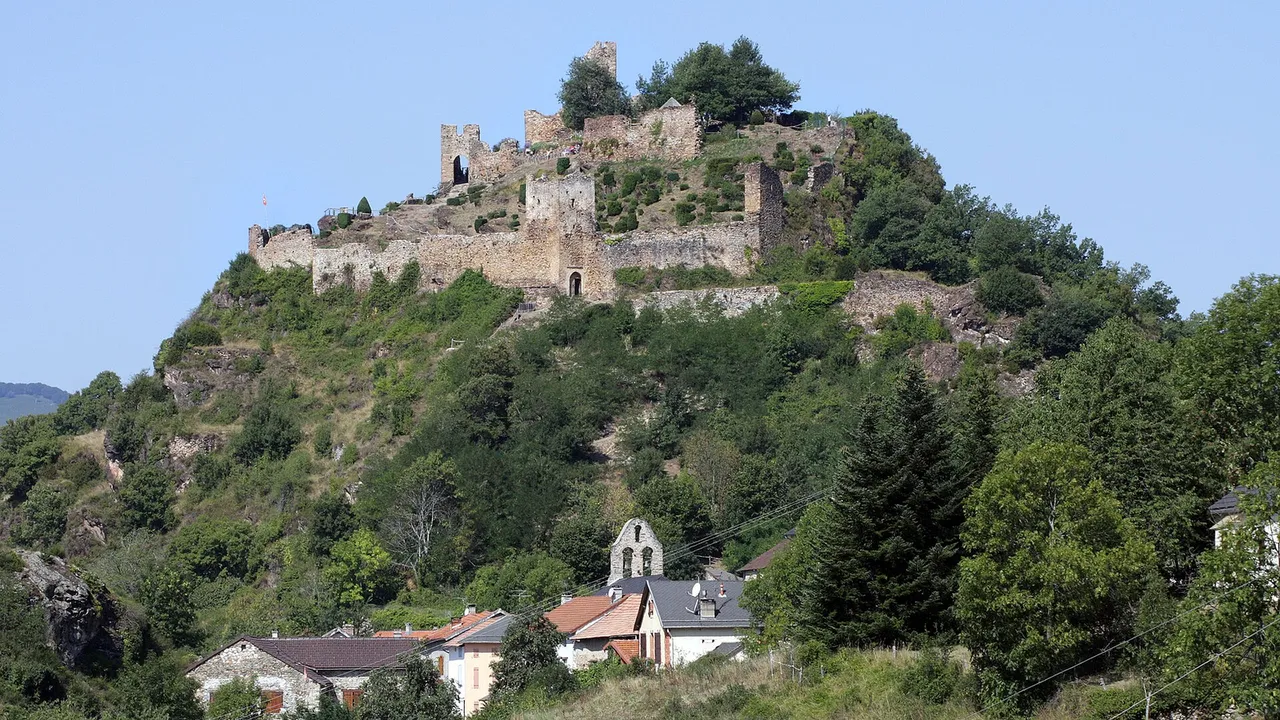
The path climbs steeply from the ticket office, between limestone boulders and box hedges. Ten minutes' walk, no more, but enough for the village of Lordat to disappear below and for the wind to start blowing differently — sharper, more insistent, as if altitude had its own weather. Then, all at once, the first stones appear: a half-collapsed curtain wall, a gateway cut into a tower, and beyond, the whole upper Ariège valley opening out beneath your feet.
You understand, once you’re up there, why this spot was chosen. And why, seven hundred years earlier, others chose it for the same reasons — with far less peace of mind.
A Fortress Before It Was a Refuge
Perched at 965 metres on its rocky spur, Château de Lordat ranks among the oldest and largest medieval fortresses of the former County of Foix. The ruins visible today date, at their core, from the 10th and 11th centuries; the site was then considerably enlarged in the 13th century — right when it was about to need it most.
Three successive enclosures still protect the summit, with gateways cut into the towers, curtain walls and a cistern that would have let the castle withstand a siege. At the centre, the base of a former rectangular keep marks what was once the seat of Lordat’s lordly power.
When Montségur Falls, Lordat Takes Them In
In 1244, after a siege lasting several months, the fortress of Montségur — the most famous Cathar stronghold, some thirty kilometres from here — surrendered. The defenders who refused to renounce their faith were burned alive at the foot of the pog. It’s one of the darkest episodes of the Albigensian Crusade, the war waged by the Church of Rome and the Kingdom of France against Catharism, a dissident Christian movement born in the south-west in the 12th century.
But the fall of Montségur didn’t mean an immediate end to Catharism in the region. Pursued by the Inquisition, a number of Cathars found refuge at Lordat, further south, in this perched fortress that would remain one of the last to shelter them before repression eventually spread across the whole of the upper Ariège. The castle, occupied throughout the crusade, still carries the memory of that last stand today.
Listed as a Monument Historique since 1933, the site is now managed by the Communauté de communes de la Haute-Ariège.
Planning Your Visit
|
❗
|
Opening hours, events and prices change every season — contact the castle directly before heading over. Château de Lordat, 09250 Lordat. Tel: +33 5 61 02 75 98 or +33 5 34 14 31 87. Email: chateau.lordat@cc-hauteariege.fr. Website: patrimoines.hauteariege.fr. |
A few practical points that don’t change from year to year:
-
Allow about 10 minutes' walk uphill from the ticket office to the castle — wear walking shoes with ankle support.
-
The path isn’t accessible to visitors with reduced mobility.
-
Dogs are welcome on a lead.
-
Depending on the season, the site offers guided tours, a "Mission Cathare" escape game by reservation, storytelling and talks on Catharism, and stargazing evenings.
-
In July and August, a free-flight falconry show takes place right within the castle walls: falcons, buzzards, eagles and other raptors perform overhead, with the Ariège valley as a backdrop. Expect around €10–11 per adult, €7–8 per child, or €29 for a family pass (2 adults, 2 children) — confirm current prices for your dates. Plan to arrive 15 minutes before the show starts, and bring a hat, water and sturdy walking shoes.
The Cathar Castle Trail
Lordat isn’t an isolated site. Ariège and the neighbouring Aude department together hold around ten fortresses tied to the same history, and some fit easily into the same day trip from Ax-les-Thermes:
-
Château de Foix — about 25km from Lordat, the former seat of the Counts of Foix, perched on its rock at the heart of the town. A natural way to extend the day.
-
Château de Montségur — about 13km from Lordat, the highest of the Cathar castles (1,207m) and the site most heavily laden with history from the whole crusade.
A History That Stays in the Stone
You don’t visit Lordat the way you’d visit a fairytale castle. There are no intact turrets, no period furniture, almost nothing, really, beyond stone, wind, and the drop above the valley. That may be exactly why the place stays with you: because it tells you nothing except what actually happened there — a fortress, a refuge, a last stand, and, in the end, a defeat. The view, at least, hasn’t changed in seven hundred years. Perhaps that’s the one thing you truly share, standing up there, with those who once took refuge in it.